
Written by Peter Winstanley
The Data-Centric Architecture Forum was a success!
If growth of participants is an indicator of the popularity of an idea, then the Third Annual Data-Centric Architecture Forum is reflecting a strong increase in popularity, for this year over 230 participants joined together for a three-day conversation. This is a huge increase on the 50 or so who braved the snows of Fort Collins last year. Perhaps the fact that the meeting was online was a contributing factor, but then spending three days in online meetings with presentations, discussion forums, and discussions with vendors needs a distinct kind of stamina, as it misses out on the usual conviviality of a conference – meals together, deep discussions over beer or coffee, and thoughtful walks and engaging sightseeing trips. This year’s Data-Centric Architecture Forum was a paradigm shift in itself. The preparatory work of Matt Faye and colleagues at Authentric provided us with a virtual auditorium, meeting rooms, Q&A sessions, socialization venues, and vendor spaces. The Semantic Arts team were well-rehearsed with this new environment, but it was reassuring to find that conference attendees soon became acquainted with the layout and, quite quickly, the conference was on a roll with only the very infrequent glitch that was quickly sorted by Matt and team.
Paradigm shift was not only evident in the venue, it was also a central theme of the conference, the idea that we are on the cusp of a broad transformation of practice in informatics, particularly within the enterprise. Dave McComb placed the Kuhnian idea of revolution squarely on the table as he commenced proceedings. In many ways this is something we have become all too familiar with as the internet has given us hospitality companies with no hotels, taxi companies with no cars, and so on. Here we are moving to there being applications with no built-in data store. How can this possibly work? It flies in the face of decades, perhaps centuries, of system design. This Forum focused on architecture – the key elements necessary to implement a data-centric approach.
Some of the presentations covered the whole elephant, trunk to tail, whereas others focused on specific aspects. I’ll take a meander through the key messages for me, but as ever in these sorts of reviews, there is no easy way to do justice to everyone’s contribution, and my focus may not be your focus. However, given that the Forum was a ‘digital first’ production, you will be able to access the talks, slide decks and discussions yourself to make up your own mind—and I hope that you do. A full complement of all recorded presentations can be available for purchase at the same price as admission. They can be purchased here or inquire further at [email protected]
Understanding that “The future is already here — it’s just not evenly distributed” means that we have to disentangle the world around us and sift out the ideas and the implementations that show this future, and perhaps recognise early places where the future is likely to arise from places where the technology isn’t perhaps the most sophisticated, but the marketing is more advanced (thinking Betamax vs VHS here). As Mark Musen pointed out in “A Data-Centric Architecture for Ensuring the Quality of Scientific Data”, when given a free reign people make a mess of adding metadata, and this can be remedied by designing minimal subsets that do a ‘good enough’ job. Once a community realises that a satisficing minimum metadata set can deliver benefit in a domain, this model can be rolled out with similar good effect to other domains. We know from Herbert Simon’s work that organisations naturally fill this ‘satisficing’ concept of operations, and as Alan Morrison and Mark Ouska discussed in their presentation on lowering the barriers to entry, going with the organisational flow – ensuring that there was an organisational language to express the new ideas – is a key element in successful adoption. How else are we to bring to market the range of technologies presented by the 13 vendors exhibiting at the Forum? Their benefits need to be describable in user stories that have resonance in all enterprises, for this isn’t just a revolution for science or for engineering, just like Berners-Lee tweeted about both the Olympic Games and the World Wide Web at the start of the London Olympic Games, “This is for everyone”.
Being for everyone requires the technologies, such as the inclusion of time and truth or the responding to events that are possible in modern triplestores, are able to be populated at scale with soundly-created information assets. The approaches to “SemOps,”an automation ecosystem to provide scalable support to people managing enterprise data assets in a data-centric modality, was the focus of the presentation by Wallace and Karii. Being for everyone also means that information needs to be used across domains, and not just within the highly tailored channels that are typical of current application-centric architectures. Jay Yu from Intuit and Dan Gshwend from Amgen, among others, showed their organisation’s paths to this generalised, cross-domain use of enterprise information, and the social dimension of this liberation of data across the enterprise was considered by Mike Pool and also by Laura Madsen, who both provided their experiences on governance in data-centric worlds. Security was also covered, albeit later in a video presentation, by Rich Sinnott from Melbourne.
So, where are we at? With attendance from North and South America, Europe and Oceania, the Forum showed us that there is a global appeal to the ideas of data-centricity. There is commercial activity by various scales of solution vendors and implementing enterprises. There is also consideration both within enterprises and by specialist consultants in the human factors associated with implementation and management of data-centric architectures. However, there are still considerable challenges in cross-domain implementation of data-centricity, and the need to scale simultaneously not only the technical infrastructures and human skills, but also the involvement of individuals at a personal level in the management of their information and their active involvement in the contribution of that information to the global web of data. The news from the BBC on their work with Solid pods and other personal information stores gave the Forum an inkling of the scale of change that is about to hit us. Let us hope that the Third Data-Centric Architecture Forum has played a catalytic role in this global transformation, and I hope to have many enjoyable discussions with readers as we evaluate progress on our journey at the next Forum in a year’s time.





 Now that we’ve considered the end of the data lifecycle management picture, take a look at the start—data acquisition and creation. If you’ve done the work so far of identifying your business processes and assessed how well your data supports your goals and aligned to your data lifecycle management policy (formal or otherwise), you know how important it is to also consider the introduction of new data. We touched on this in the first two parts, but there’s a subtle difference between considering how data came to be in your collection and considering data that you will include in your collection from this point forward.
 methodology. Months or occasionally years would be spent getting the requirements for a project “just right.” The belief was that if you didn’t get the requirements right up front, the cost to add even a single new feature would cost 40 times what it would cost if the requirement were identified up front. It turns out there was some good data on this cost factor, and it still casts its shadow any time you try to make a modification to a packaged enterprise application, 40 x is a reasonable benchmark compared to what it would cost to implement that feature outside the package. This as a side note is the economics that creates the vast number of “satellite systems” that seem to spring up alongside large packaged applications.
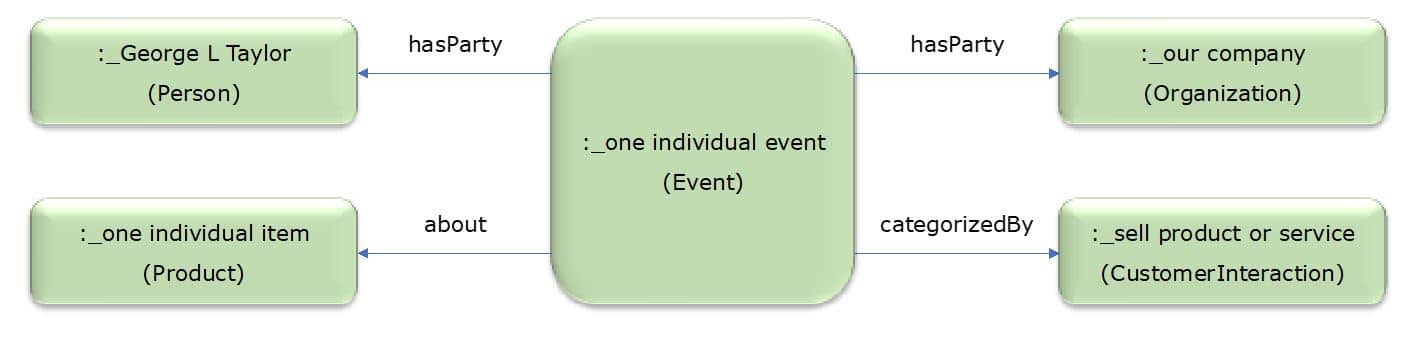
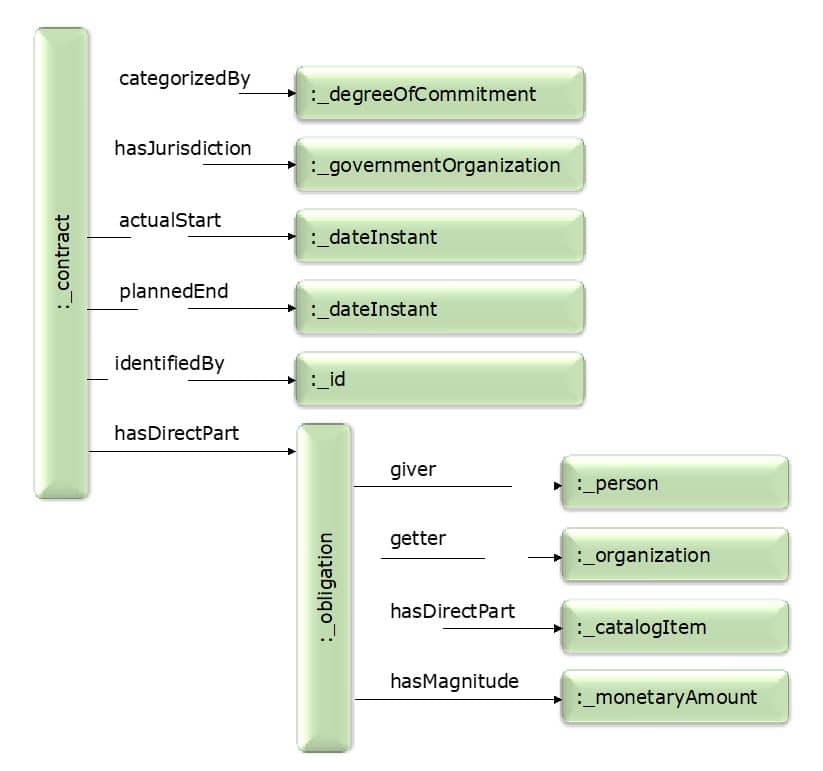
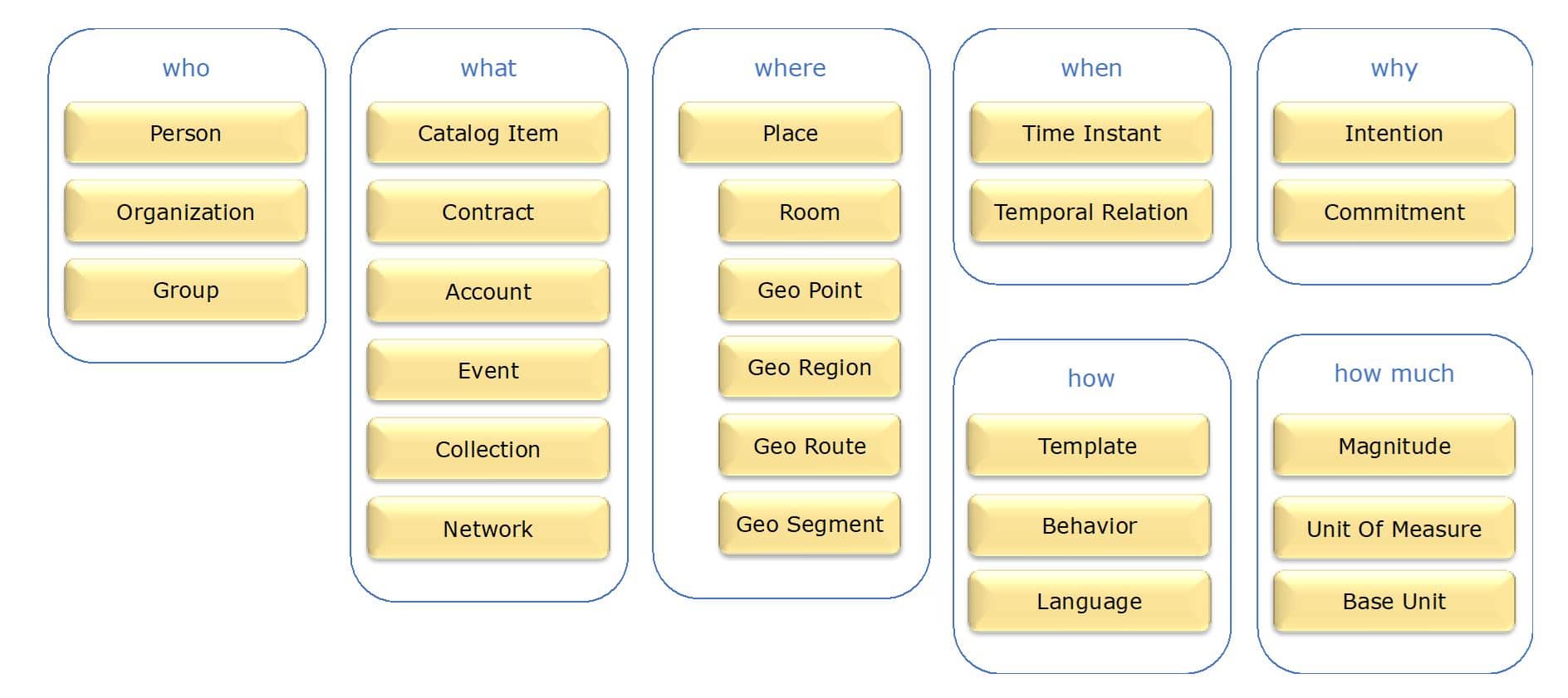 Gist also includes about 100 standard ways things can be related to each other (Object Properties), such as: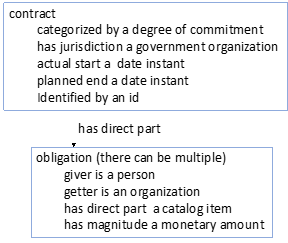
 The COVID-19 pandemic is a clear example of how healthcare practitioners require swift access to enormous amounts of diverse information to efficaciously treat patients. They must synthesize individual data (vital signs, clinical history, demographics, and more) with rapidly evolving knowledge about COVID-19 and make decisions relevant to the conditions from which specific patients suffer.ners rely on point-of-care decision support systems to accelerate patient-care analysis and to scale treatments for intake quantities of global pandemics. They analyze a plethora of inputs to produce tailored treatment recommendations, in near real-time, which significantly enhance the quality of treatment.
 with her method, and she provides some guidance on how to do so and examples from her clients. The example Marie Kondo uses in her book is a young woman who lives in a tiny apartment, typical of Japanese cities. Her floor is covered with things and her bed is a storage space when she isn’t sleeping on it. She comes home from work tired and her living space compounds that exhaustion. Maria Kondo has a dream and that dream is simple: to have the space be free from clutter, like a hotel suite, where she can come home and relax with tea and a bath before bed.
 antithesis of joy is not being able to produce the documentation that the auditor needs to conduct the audit. That could be because you can’t access it, because what you have isn’t what they need, you don’t have what they need, or what they need is too difficult to find amidst data and information that you have. In this example, the information that allows you to have peace of mind during an audit is what you should keep. The bigger pattern here is that it’s important to know what business processes, data flows, decision points, and dependencies are impacting your business, and what the inputs and outputs are to those process steps.
 bogged down in the details too soon. Marie Kondo advises that you create subcategories according to your need.